
|

|
||
|
Landmarks ~
Churches ~
Pubs ~
Shops ~
Amenities ~
Dwellings ~
Events ~
Schools ~
Sports
Industrial ~ Transport ~ Folklore ~ Families
~ Gallery - Dwellings ~
Ellowes Hall ~
Farms ~
Ruiton House ~
Sam's old house ~
Petworth House ~
Pop House ~
Prefabs
Round House ~ Straits House ~ Prospect House ~ The Quarries ~ 8 Bull St. ~ Old Vicarage Bull Street Cottages ~ Other
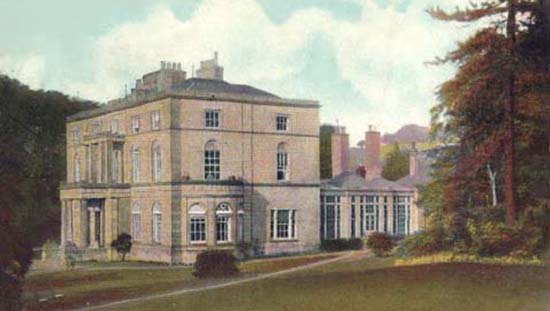
The Quarries
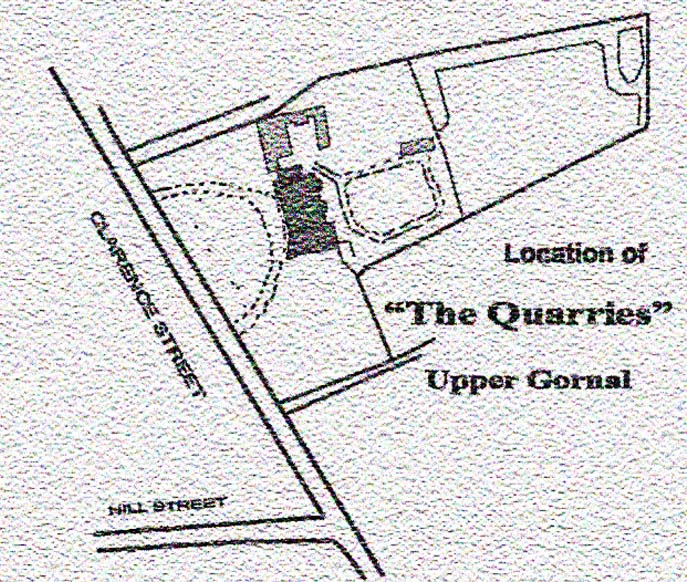
Clarence Street, Upper Gornal.
A gentleman's residence, occupied after 1840 by
John Turton Fereday and family when they vacated The Ellowes.
The Quarries stood in its own grounds off Clarence Street, a somewhat less grand residence than
the Ellowes but nevertheless elegant.
It became the home of the Fereday family until the 1860s when several members of the family emigrated to New Zealand.
According to Melville, Reverend John Palmer, B.A., Unitarian minister of Dudley resided there in 1851.
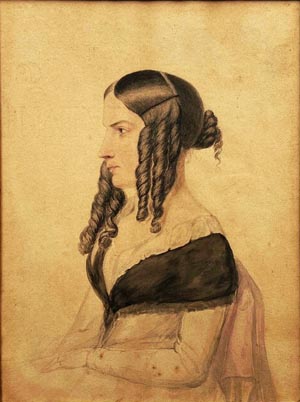 Sarah Howl, portrait dated 1845.
At least by 1871 it was the residence of Jonathan Edwards Howl,
owner of Tibbington Brick Works and Colliery at Princess End, Tipton.
In 1843 he married Sarah Aston, the daughter of Edward Aston, a wealthy
coal master also from Tipton.
The Howl family were living at The Quarries with their ten children thereafter.
After Jonathan Howl's death in 1874, his wife Sarah continued to live at The Quarries
with the family until her death in 1905.
Mechanical engineer and eldest Son Edmund, now head of the household at The Quarries,
became the manager of his father's brick works.
In 1880 Edward Howl founded an
engineering company with brother Oliver and family friends William Lee
and Thomas Henry Ward, then trading as Lee, Howl, Ward and Howl, hydraulic engineers.
When Ward retired in 1887 the enterprise became the Tipton firm of
Lee, Howl & Co., manufacturing pumps and other related machinery principally
for the mining industry.
Edmund Howl continued to live at The Quarries and during the 1920s he
was also a Justice of the Peace.
Edmund Howl died on 11 October 1934 at the age of 87.
The Quarries came up for sale in 1927.
During the 20th century, the grounds were often used for fetes and shows.
The house was demolished by the 1960s and the land off Clarence Street developed.
1927. Dudley Herald, June.
~
|



|
|